(Fresh Shan Yao being sold at the top of Jin Dao Xia gorge)
If you haven't already met, I'd like to introduce you to the Mountain Yam (Shan Yao). This is one of the most prevalent TCM medicinal herbs that is also commonly used as a food in a variety of dishes such as soups, hot pot (Huo Guo), stir fried dishes, and grated or sliced raw (the raw version is used often in Japanese cuisine). Shan Yao is usually found dried in the U.S., while you can still use this version in soups, hot pot, and cooked dishes, you can not use it raw unless it's fresh.
(Shan Yao soup at a Buddhist Temple vegetarian restaurant)
Shan Yao tastes a little like a creamier and earthier tuber, it has a thicker consistency that is almost a little mucilaginous at times depending on how you use it. Not everyone will love Shan Yao, I do. Since I've been living back in China, I've had it as a creamy soup (with Shan Yao being the primary ingredient), I've had it in hot pot (you add it into the hot pot broth, let it cook, then dip it into your sesame paste sauce and eat it) and I've had it cooked into a broth based soup.
(Hot pot/Huo Guo, spread with Shan Yao in the vegetable basket)
Shan Yao is used in TCM (Traditional Chinese Medicine) as an herb to : (courtesy of Kamwo Pharmacy) 1. tonify (i.e. aid or supplement) the spleen and stomach, especially in cases of deficiency where there are symptoms such as fatigue, loose stools, weak digestion, or lack of appetite. 2. tonify lung qi and yin (i.e. supports lung function and moisture), examples of issues with this would be chronic wheezing or coughing. 3. tonify the kidneys (i.e. supports kidney function) when there is deficiency symptoms such as weak or sore lower back, spermatorrhea, vaginal discharge, or frequent nighttime urination. 4. treats 'wasting and thirsting' disorder (i.e. similar to diabetes with frequent urination, excess hunger or thirst, with possible emaciation.). Shan Yao (as per Tom Leung, Kamwo's owner, as well as a TCM herbalist and pharmacist) works particularly well as an astringent in cases of diarrhea, frequent urination, excess vaginal discharge, or excess sweating.
(Shan Yao is one of the many selections from an array of ingredients you can choose to put in your individually made soup at a food stall)
When I bought the fresh Shan Yao all the way at the top of this post, I was hiking with a lovely lady who shared the following (Japanese) recipe for mountain yam (Yamaimo in Japanese) :
Peel outside layer of Shan Yao/Yamaimo, wear gloves if you want to avoid itching, put yam into a water/vinegar solution so it doesn't yellow and to kill the oxalates which cause itching, slice up as you wish (thin or thicker), add soy sauce, wasabi, and shredded nori. Eat with rice or as is.
[a medicinal cooking blog: using food as medicine to treat whatever may ail you]
Showing posts with label chinese medicine. Show all posts
Sunday, November 13, 2011
Tuesday, May 17, 2011
Mushroom Medicine
Mushrooms have been used as medicine for millennia. Their DNA most closely resembles human DNA (as opposed to a plants DNA), lending them a strong biological and sometimes also a mythical link. Mushrooms will pop up above and below ground and can have stems or simply manifest as a puffball mushroom sans stem (used to staunch bleeding in Native American medicine or for sore throat in Chinese Medicine, they are known as Ma Bo).
From the Chinese medicinal cooking perspective, mushrooms (all types) have a wide and incredible healing capacity. They are cool and sweet in nature; decrease lipid (fat) levels in the blood; treat liver disorders (hepatitis, cirrhosis, liver cancer, or general liver toxicity); treat excess phlegm (in cases of congestion in the lungs); increase immunity (some are stronger than others, the Ling Zhi variety fares best for this); help to reduce tumors; and promote appetite (again, think cancer and a decreased appetite here).
Morels (Morchella esculenta) have been shown in particular to increase immune function in humans. They tend to grow around white ash or elm tree's and will show their faces sometime in the Spring, anywhere from April to early June, depending on where you are in the world and if they happen to grow there. If you are lucky enough to be where they are, you can find them in farmers markets where savvy mushroom foragers will share their bounty. They are only found growing wild and have not been cultivated to date (much like truffles). Though there aren't many mimics of morels, when foraging for them and any mushroom, you should always beware as a poisonous mushroom can not only make you very sick but can also kill you.
The most common morels are the yellow (M. esculenta), white (M. deliciosa), and black morels (M. elata). You may also find the half free or spike morel (M. semilibera) earlier in the season. Often morels live in symbiosis with the trees they grow by where they will provide the tree with water and the tree in turn will provide sugar which the morel will feed on. Their appearance in the Spring in conjunction with their immunity boosting capabilities after a long winter is yet another perfect example of how eating medicinally goes hand in hand with eating seasonally.
(spike morel, usually shows up before yellow and black morels)
Thursday, March 31, 2011
Burn Salve : Egg Whites
Hot off the press (though it's been around the block and back for some time) : egg whites are an excellent salve for burns. The high collagen content helps in healing and soothing the burn as well as restoring the skin to it's natural condition. You want to keep applying layers of egg white as they dry and form a white film over the burn area. If you have a third degree burn this absolutely does not apply, but in the case of a moderate sunburn (for example) that is still in the first degree category this might just be the remedy you were looking for. Do not apply when there are blisters on the skin, this is best used after the acute stages. If the burn is either larger than your palm or has penetrated past the dermis layer of skin, consult a doctor immediately. Part of the reason egg whites are so healing is that it is basically the placenta of the developing chicken and placenta has always had a long history as a healing medicinal, in both TCM and Native American medicine. Some other home remedies that have been recommended for burns are : aloe vera, honey, and vinegar.
Friday, March 4, 2011
Guest Post: Shiso Leaf Uses
A little about Jeremy:

Jeremy Cornish is an Acupuncturist and Ju Jutsu teacher located in Naperville, IL. He is currently involved in multiple projects including an acupuncture stress study, "Acupuncture Happy Hour" on-site in offices, and Executive Ju Jutsu, which is an executive coaching/team building experience. Keep up with him at www.onecirclewellness.com
__________________________________________________________________

Eating sushi is a joy. I believe that the rituals and accoutrement around the process add a lot to the experience. Most people enjoy the wasabi, the soy sauce, and even the pickled ginger that typically come with sushi. But have you ever wondered why they stick a piece of green plastic grass in the mix?
That green plastic grass is a tragedy. In Chinese Medicine, we recognize the energetic effects of foods. For example, sushi is a raw, typically cold food. Cold is typically not conducive to digestion, so traditional people would eat herbs to balance the cold effect. This is why we usually see warm spices like ginger, or wasabi on the plate. Also, miso soup and green tea warm the body and aid the digestion.
There is an herb called shiso, or Zi Su Ye, or Perilla Leaf. This is a purple or green leaf that we use in Chinese Medicine for its warm, acrid nature (can help with acute cold/flu symptoms). The warm nature is good for the digestion, and helps to offset the cold of the sushi. In very nice sushi places, this leaf (pictured above) will accompany the sushi. You can eat this. It tends to have a lemon/mint flavor.
The other benefit of the shiso leaf is its ability to kill parasites, and prevent mild food poisoning. Those are two things to be considered anytime we eat raw fish! To me, the green plastic grass is a sign that the meaning has been lost. The people serving the sushi have forgotten the importance of the shiso leaf. Using herbs and spices to balance the energetics of food used to be common sense, and common practice.
Don’t let your simple medicines be replaced by plastic! Demand the real thing! Say Yes to shiso!!

Jeremy Cornish is an Acupuncturist and Ju Jutsu teacher located in Naperville, IL. He is currently involved in multiple projects including an acupuncture stress study, "Acupuncture Happy Hour" on-site in offices, and Executive Ju Jutsu, which is an executive coaching/team building experience. Keep up with him at www.onecirclewellness.com
__________________________________________________________________
Eating sushi is a joy. I believe that the rituals and accoutrement around the process add a lot to the experience. Most people enjoy the wasabi, the soy sauce, and even the pickled ginger that typically come with sushi. But have you ever wondered why they stick a piece of green plastic grass in the mix?
That green plastic grass is a tragedy. In Chinese Medicine, we recognize the energetic effects of foods. For example, sushi is a raw, typically cold food. Cold is typically not conducive to digestion, so traditional people would eat herbs to balance the cold effect. This is why we usually see warm spices like ginger, or wasabi on the plate. Also, miso soup and green tea warm the body and aid the digestion.
There is an herb called shiso, or Zi Su Ye, or Perilla Leaf. This is a purple or green leaf that we use in Chinese Medicine for its warm, acrid nature (can help with acute cold/flu symptoms). The warm nature is good for the digestion, and helps to offset the cold of the sushi. In very nice sushi places, this leaf (pictured above) will accompany the sushi. You can eat this. It tends to have a lemon/mint flavor.
The other benefit of the shiso leaf is its ability to kill parasites, and prevent mild food poisoning. Those are two things to be considered anytime we eat raw fish! To me, the green plastic grass is a sign that the meaning has been lost. The people serving the sushi have forgotten the importance of the shiso leaf. Using herbs and spices to balance the energetics of food used to be common sense, and common practice.
Don’t let your simple medicines be replaced by plastic! Demand the real thing! Say Yes to shiso!!
Wednesday, October 13, 2010
Umami : The Flavor of Satisfaction
Umami is a word borrowed from the Japanese (thank you, Japan!) meant to describe a flavor that falls somewhere between a savory/salty, sometimes sour, with often times a tinge of sweet taste. Umami is the flavor of satisfaction according to the area of the brain that is initiated upon ingesting it. Some of the foods which contain the umami flavor are (but not limited to) : soy sauce, seaweed, fish sauce, bacon (!), fish or meat stock, umeboshi plums, oysters, truffles, parmesan, anchovies, lobsters, crab, shrimp, and ripe tomatoes. Umami has in fact been identified and studied, that is how important it is as a flavor! In 1908 Kikunae Ikeda, a Japanese chemist found that glutamate was the common compound in all the above mentioned foods that produced the taste sensation of umami. Glutamic acid is one of the 20 non essential aminio acids. Kikunae Ikeda isolated this compound in the foods with an umami flavor (also referred to as the fifth taste by some) and patented monosodium glutamate (MSG) to mimic it.
What is interesting about umami from the perspective of medicinal cooking where you are using your food as medicine is the element of satisfaction that it emits. If you are one of those people who "can't get no satisfaction" from their food, maybe a little umami is missing to help curb cravings or halt overeating? Chinese Medicine has broken down tastes and flavors according to the five elements : sour, salty, bitter, spicy, and sweet. Four of those are considered the primary tastes, all except spicy, and then umami is the "fifth taste". Umami would be a combination of those four elements/tastes and it is through that approach to eating that you are able to balance your palate and your body's needs.
Umami has gotten a lot of press in the last few years in the U.S., so much so that a Umami Information Center was created in NYC just for this flavor! There's also an Umami Food and Art Festival. All you have to do is google umami and you will stumble upon article after article in publications such as the New York Times, The New Yorker, Saveur, Food & Wine, and on and on. Clearly, this is an exciting concept that has finally arrived in the West, even though everyone was already eating it all over the world and all that was needed was a word and the framework to reference it.
Recently, I had a craving for an umami-rich lunch, just for me and my happy self. Using four ingredients which are full of umami naturally, I constructed an Umami Pasta with : anchovies, cherry tomatoes, fish sauce, and parmesan (umami ingredients) along with lime, parlsey, red onions, Thai bird chiles, and olive oil.
Umami Pasta
Ingredients : 1 can of anchovies in olive oil, 1/2 red onion, 1 lime, 1 tbspn fish sauce, 3 Thai bird chiles or other chile substitute, curly or flat leaf parsley, fresh parmesan block to be grated over finished pasta, 10-12 cherry tomatoes, 4-6 ounces penne
(serves ONE, so if you want to make it to share, double the ingredients)
1. Slice moon slices of half a red onion and begin to gently saute in olive oil from the tin of anchovies. Add 3 minced Thai bird chiles. Once the onions begin to soften, add the whole can of anchovies.
2. Once the anchovies begin to break apart and get pasty, add the whole cherry tomatoes. Cook them for a few minutes until you see them begin to get softer at which point you will take the spatula and smash each one flat without stirring too much, you want to keep the tomatoes intact but flattened. They become pools of flavor.
3. Drizzle 1 tbspn of fish sauce and squeeze 3/4's of a lime over everything, this should give it enough body and juice to make it saucy. Let it simmer on a low heat for a few more minutes so it melds.
4. Add coarsely chopped parsley in the last minute of cooking so that it softens and cooks in just a little bit without losing the crisp texture.
5. Pour sauce over pasta and then grate fresh parmesan. Enjoy the umami bomb!
Friday, September 24, 2010
Love from the Sea

The sea urchin (a.k.a. uni in Japanese or erizo de mar in Spanish): pure joy for your kidney's. This was my lunch today, straight out of the shell. It melted in my mouth. Salty is the flavor of the kidney's according to Chinese Medicine theory and thus much of the briney seafood will treat this organ system which is in charge of your essence i.e. sexual energy, bone structure, adrenal function, ability to cleanse and purify, and your overall grounding and stability on a physical and emotional level. Sea Urchin is also sweet and creamy and will target the digestive function. If you can get your hands on some of this joy - do it! Tossed with fresh pasta, spread on a crispy baguette (much like roasted bone marrow), gently placed on a piece of rice as sushi, or eaten as I did today, plain and out of the shell from the wonderful Dirk's Fish Market in Chicago (Dirk and all the people that work there make the trip worthwhile!).

The soft beige roe is gently removed from the shell and washed of it's surroundings before you either eat it right there and THEN or you choose one of the aforementioned methods of preparation.
Thursday, September 16, 2010
A Duck's Egg
I wanted to share the good news on duck eggs (which I already loved). While a free range farm fresh chicken egg is a wonderful source of protein and nutrition, duck eggs are even higher in concentrated amounts of vitamin A and D, manganese, zinc, copper, potassium, sodium, phosphorous, calcium, and iron. This also means they are higher in cholesterol, though it is considered the "good" cholesterol i.e. monounsaturated fats. Duck eggs are an alkaline food while chicken eggs are more on the acidic side. If you are allergic to chicken eggs, you usually will not be to duck eggs. And, eggs are the perfect protein, full of high quality essential amino acids. Does it get any better? That is, if you love eggs to begin with.
In Chinese Medicine, eggs are considered yin in nature, nourishing all that is liquid in the body, such as blood and essential fluids. Eggs are thermally neutral which means they are neither warming nor cooling and can be ingested by people who are at one extreme of the spectrum or the other. Eggs are an excellent food for fertility purposes, both before (pre-conception) and post partum. According to P. Pitchford (Healing With Whole Foods), eggs should be avoided in an overly damp condition (i.e. someone who is very overweight or if you have a mucus overload).
I like to poach or make soft boiled duck eggs and serve them over a salad or a tender meaty dish like I did before the summer started in this pork chop braise. Once it got warmer, out came a salad of radicchio, chick peas, carrots, and onions with a lovely soft boiled sweet duck egg on top. Apparently you can also bake with duck eggs, though I can't share any recipes on baking as it's not my forte. I drizzled a tangy vinaigrette over the salad which consisted of : olive oil, honey, sea salt, fresh crushed black pepper, dijon mustard, and rice vinegar. Delicious.
Monday, August 30, 2010
The Sandwich Alternative : Fresh Vietnamese Spring Rolls
If you, like myself, are craving a sandwich-like meal without the added starchiness of the bread, then the Vietnamese fresh spring roll is here to make your day that much better as you take a chewy and pliant bite of sweet shrimp (or tender meat) along with soft rice noodles, crunchy lettuce, savory herbs, sweet carrots, and juicy bean sprouts, or whatever else you decide to put in there. Recently, I wrote about the damp elimination diet in Chinese Medicine. This entails eliminating "damp forming" foods (i.e. wheat, processed sugar, dairy, cold and fried greasy foods) for a period of time until said dampness (which can manifest as : obesity, sinus congestion, lethargy, loose stools, heavy headaches) is resolved, usually this is done in conjunction with herbal therapy but it is always necessary to address your diet. Sometimes it's hard to give up sandwiches in the busy lifestyle we've created, where you need to eat something you can literally grab in one hand while you're either doing something else with the other or you when you simply don't want to fuss around with utensils. If you're on the outs with bread and are still craving a hand friendly meal, then this spring roll is one of the answers (a corn shell taco with fresh ingredients could the be another).
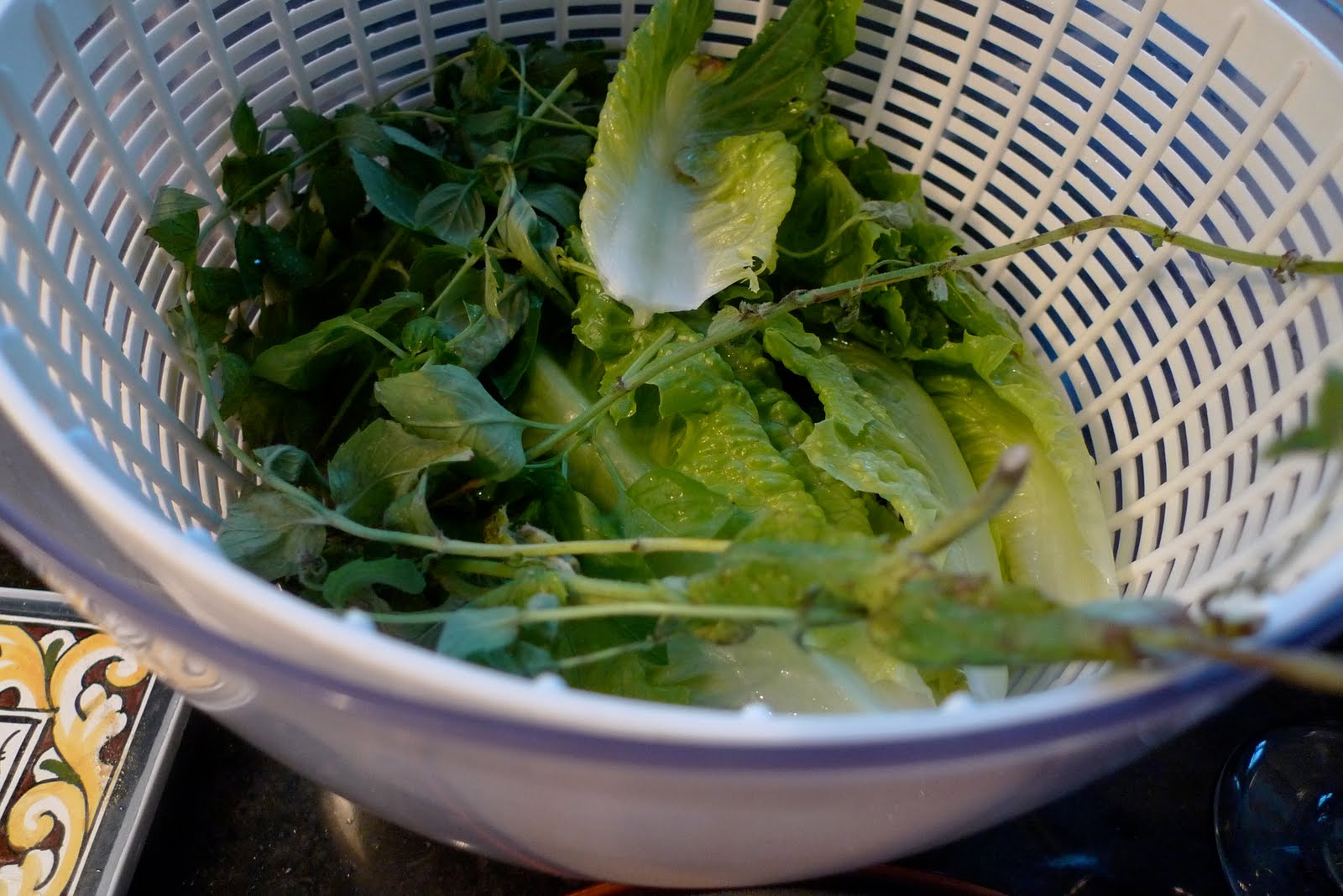
The great thing about these fresh spring rolls is that they can be cool and warm, fresh and satisfying all at the same time. And you can put whatever you want in them! There are no rules. Traditionally they tend to be made with sweet shrimp, rice noodles, lettuce, herbs (mint, basil, cilantro), strips of carrots, cucumbers, scallions, and bean sprouts. But I'll do them with satay flavored chicken, or spicy beef, or soft pork belly and mix it up with radishes in lieu of carrots, it all depends on what you're craving. Or sometimes on what's in your fridge. I don't advise skipping on the lettuce (usually a long green leaf is necessary) as that holds the filling inside and the wrapper around the lettuce. The fresh herbs have the additional medicinal benefit as well, you can see more on here on what each herb treats.
First, you'll need a packet of the circular dried rice wrappers (banh trang), which you can find in most Asian groceries or sometimes in general ones such as Whole Foods. Next, some rice or vermicelli noodles. Then, a relatively firm long leaf lettuce such as a romaine or preferably a red leaf lettuce. Those are the basics and from there you can go where you please with the fillings! Shrimp, tofu, beef, chicken, fish, or only vegetables. The vegetables can be carrots, radishes, cucumbers, scallions, red peppers, etc. The herbs (go ahead and go wild here) can be basil (sweet Italian or spicy Thai), mint, cilantro, etc. Finally, you make a sauce with rice vinegar, fish sauce, garlic, cilantro, chiles, and you can also have a hoisin sauce on hand for sweetness or some siracha. Put them all in little bowls so you can pick how you want to dip and flavor individually. Below is my version of how to make Vietnamese fresh spring rolls but traditionally they are made between two wet towels or something along those lines, I find this way a little easier for my purposes.
Instructions :
1. Set out all your ingredients on a counter so you can have them ready to go for
filling your rolls as you go quickly and efficiently (or the wrapper will get dry once you've soaked it).
2. Choose a 2-3 inch deep pan or other serving dish where you pour hot water in and where the rice wrapper will fit in perfectly. You will then basically place the wrapper in 1 inch of hot water (have a big jug of boiled water available for replenishing) and let it sit for less than a minute until it just gets soft and no longer. Take it out gently with both hands holding it on either side and place on a plate.
3. Place a lettuce leaf in the center, add a bit of rice noodles (maybe 3 spoonfuls worth, not too much), then the meat, fish, or shrimp etc. you've chosen, then the carrots, cucumbers, or whatever vegetable you have chosen, and finally the herbs.
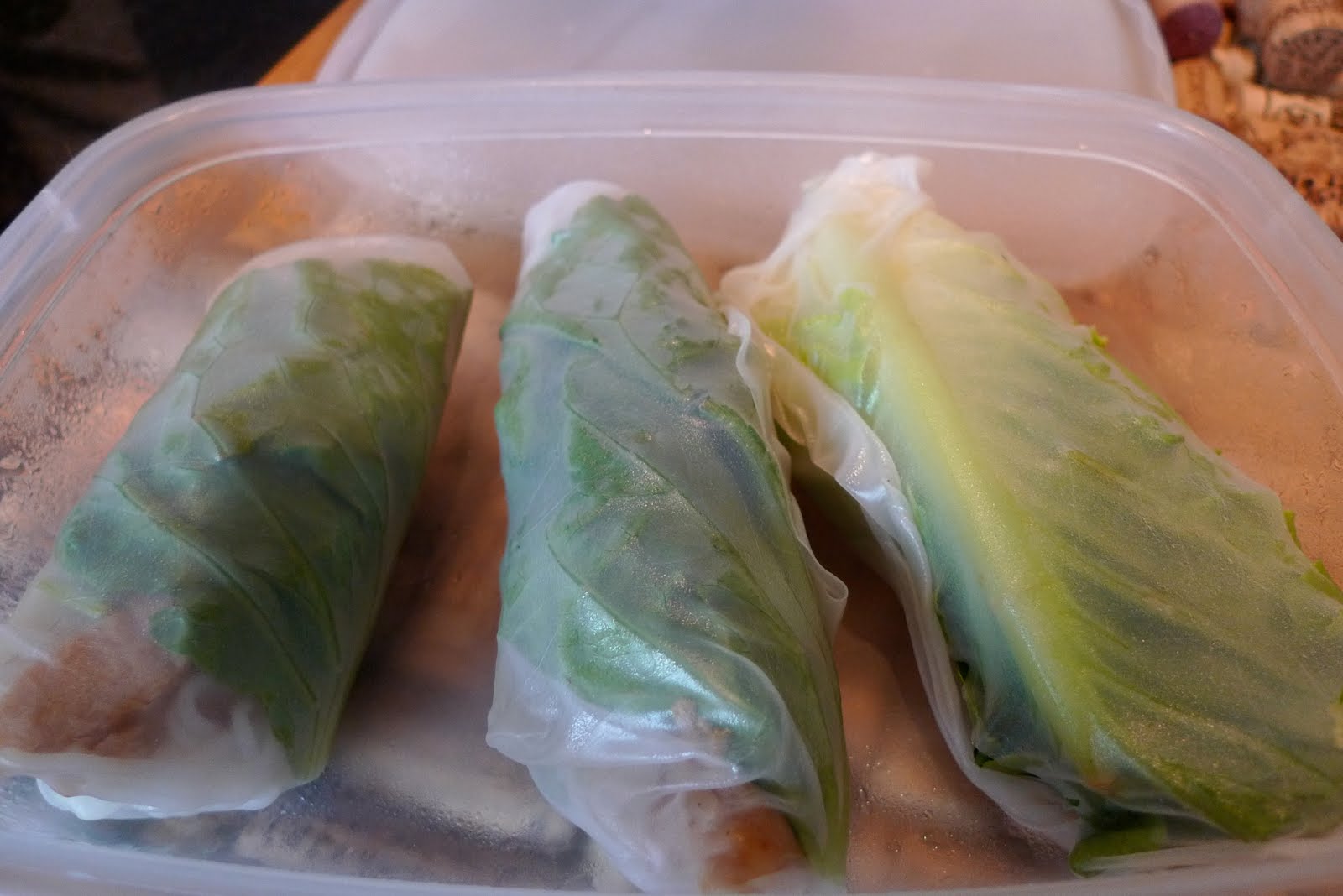
4. Take the long side and place gently but firmly over the fillings, then take either side and fold inwards (see picture), and then finally roll it like a cigar (tightly) without compromising the thin rice wrapper and seal it. This should all be done relatively quickly as the rice wrapper dries out in the air.
5. Place on a plate and keep adding to that plate without letting the rolls touch eachother or they will rip. If you want to make them ahead of time, you can place a wet paper towel over them. They also remain fresh in tupperware overnight if you want to take them for lunch. They are a little drier but still good.
6. Sauces : hoisin, hot sauce (siracha), fish sauce with garlic/cilantro/lime, and vinegar with fresh chiles. You can mix and match as you please for dipping purposes. Enjoy!
Friday, August 20, 2010
Guest Post : Insomnia and Molasses
A little about Jeremy :

Jeremy Cornish is an Acupuncturist and Ju Jutsu teacher located in Naperville, IL. He is currently involved in multiple projects including an acupuncture stress study, "Acupuncture Happy Hour" on-site in offices, and Executive Ju Jutsu, which is an executive coaching/team building experience. Keep up with him at www.onecirclewellness.com
_____________________________________________________________
Sleep is an extremely important time for the body to heal and repair itself. Trouble sleeping can not only mess you up the next day, but in the long run, insomnia can weaken your system, and make you especially vulnerable to stresses and illness.
Chinese Medicine recognizes many causes of insomnia, and a common one is what we call Blood Deficiency. I'd like to explain Blood Deficiency, and share a very simple recipe you can use to build your blood.
In Chinese Medicine, we say that the blood has many jobs. It brings warmth and nutrients to all the tissues of the body. This means that the blood nourishes and moistens the skin, hair and nails. The blood strengthens the eyes, and helps the brain function. Blood brings a nice pink color to the complexion. We also say that the blood "calms the spirit".
Blood Deficiency is a very colorful way of saying that the jobs the blood normally does are not getting done. For example, someone with a very pale face, thin hair, poor vision, anxiety, and trouble remembering things would tend to fit the Blood Deficiency pattern. Also, if the patient were a female, irregular or very light menses would also be an indicator, since we say there must be enough blood to produce the menses.
People diagnosed with anemia typically fit the Blood Deficiency presentation, but not everyone that is blood deficient has anemia.
Another job of the blood is to ensure a good night's sleep. This is part of the calm spirit. We say that the spirit wraps itself in a blanket of blood while we sleep. Blood Deficiency = restless mind and trouble sleeping.

If the description of the pale faced, forgetful, dry skin, blurry-eyed, insomniac applies to you, or someone you know, there's hope! Try this simple recipe:
1 Tsp Organic Blackstrap Molasses
1 Mug of Almond Milk (or similar)
Warm the milk up (I use low heat on the stove, since I am anti-microwave, but do as you like) and stir in the molasses. Sip and enjoy.
*You may want to drink this before bed, as it has been known to cause a "nice drowse." Sweet dreams...
**Molasses is a high source of Iron (which is a major ingredient in Hemoglobin/your blood).

Jeremy Cornish is an Acupuncturist and Ju Jutsu teacher located in Naperville, IL. He is currently involved in multiple projects including an acupuncture stress study, "Acupuncture Happy Hour" on-site in offices, and Executive Ju Jutsu, which is an executive coaching/team building experience. Keep up with him at www.onecirclewellness.com
_____________________________________________________________
Sleep is an extremely important time for the body to heal and repair itself. Trouble sleeping can not only mess you up the next day, but in the long run, insomnia can weaken your system, and make you especially vulnerable to stresses and illness.
Chinese Medicine recognizes many causes of insomnia, and a common one is what we call Blood Deficiency. I'd like to explain Blood Deficiency, and share a very simple recipe you can use to build your blood.
In Chinese Medicine, we say that the blood has many jobs. It brings warmth and nutrients to all the tissues of the body. This means that the blood nourishes and moistens the skin, hair and nails. The blood strengthens the eyes, and helps the brain function. Blood brings a nice pink color to the complexion. We also say that the blood "calms the spirit".
Blood Deficiency is a very colorful way of saying that the jobs the blood normally does are not getting done. For example, someone with a very pale face, thin hair, poor vision, anxiety, and trouble remembering things would tend to fit the Blood Deficiency pattern. Also, if the patient were a female, irregular or very light menses would also be an indicator, since we say there must be enough blood to produce the menses.
People diagnosed with anemia typically fit the Blood Deficiency presentation, but not everyone that is blood deficient has anemia.
Another job of the blood is to ensure a good night's sleep. This is part of the calm spirit. We say that the spirit wraps itself in a blanket of blood while we sleep. Blood Deficiency = restless mind and trouble sleeping.

If the description of the pale faced, forgetful, dry skin, blurry-eyed, insomniac applies to you, or someone you know, there's hope! Try this simple recipe:
1 Tsp Organic Blackstrap Molasses
1 Mug of Almond Milk (or similar)
Warm the milk up (I use low heat on the stove, since I am anti-microwave, but do as you like) and stir in the molasses. Sip and enjoy.
*You may want to drink this before bed, as it has been known to cause a "nice drowse." Sweet dreams...
**Molasses is a high source of Iron (which is a major ingredient in Hemoglobin/your blood).
Wednesday, August 4, 2010
Crazy About Carrots
Carrots are a surprising vegetable. How surprising can they really be you might wonder when we have all heard how carrots are good for your eyesight and many of us have that image of a cartoon bunny chomping away on a carrot just like popeye slurped his spinach. But, did you also know that carrots are a yang vegetable in Chinese Medicine? Hmm...what is yang (and yin for that matter) as it pertains to food? I've mentioned yin and yang theory on here before when Spring last arrived. Most vegetables are yin in the sphere of Chinese Medicine nutrition. Meaning, they are nourishing, building, and more gentle. Whereas yang foods tend to be more energizing, moving, and dense (i.e. meat, root vegetables, onions, and the pungent spices). Well, a carrot is considered a strong (yang) vegetable with many capabilities. It's a real fighter prancing about in a slender orange (and sometimes yellow, white, or red) outfit with wild green hair sprouting off the top.
Carrots have a neutral thermal nature and are sweet flavored. They boost the digestive function and help detoxify the liver through the elimination of waste (i.e. also great for constipation) as well as with their diuretic effect. Carrots are also considered an anti-carcinogenic in both Western and Eastern nutrition, likely attributed to their high beta-carotene levels (which contribute the the "good for the eyes" function). Phew! That's already a lot...but, there's MORE : they help to bring the body to an alkaline state (P. Pitchford, Healing With Whole Foods), which means they can help alleviate conditions such as acne, tonsillitis, and rheumatism. Carrot juice heals burns when applied directly. Carrots help dissolve tumors and growths, as well as eliminate parasites. It seems the list is endless with carrots. If you want to read a bit more about the medicinal use of the carrot, go here.
While carrots are lovely raw and you can snack and crunch away as much as you like, they are extra healing (and easier on the digestion) if you lightly steam or bake them. You don't want to boil or overcook them but warmth is good for your digestion. I like to slow bake them (further increasing their yang capabilities) so they're pliant without losing form, sweet and caramelized on the outside, but still fresh and light. Consequently, you should try to buy organic carrots if possible as they have been listed as one of the top highly pesticide-riddled foods based on research by the USDA and the FDA.
Baked & Caramelized Carrots
1. Peel one whole bunch (about 8 carrots), chop into large 1 inch pieces. Place in pan and coat with olive oil, sea salt, pepper. Add freshly chopped herbs if you wish (correander/cilantro, oregano, or rosemary work well).
2. Bake at 375 degrees F for 45 minutes to 1 hour depending on how soft you want them to get.
3. Serve as is or with a piece of fish (pictures below : baked carrots with cilantro crusted tilapia).
Wednesday, July 21, 2010
Mint for the Mind
In all this summer heat and madness, a little mint goes a long way. Not only is it cooling and relaxing but it (Bo He) specifically targets the lungs and liver in Chinese medicine. Some symptoms or conditions that mint targets are : early stage fever, red eyes (especially from allergies), sore throat, menstrual irregularities or pain, rashes (it will "vent" them - especially in the early stages so they resolve quicker), irritability, depression, heat stroke or summer heat, or if you just simply get the feeling you need to "cool yourself off".
The especially great thing about mint is that it is considered a weed and grows easily anywhere you put it (sometimes to the detriment of the surrounding plants - beware). You can grow it in a pot on your windowsill, or plant some in your garden, or if you can't grow it then go to the store and buy some. Using it fresh or dry is fine. I prefer fresh because it evokes a much mintier flavor, but medicinally speaking, dried works well too. Buy mint tea bags if you can't do any of the above!
The key to harnessing the most medicinal quality out of mint is to ONLY steep it in boiled water for 5 minutes and no longer. I usually like to use a whole stem of mint with the branches and leaves attached and stick it in a big jug of just boiled water with a little honey and just let it sit. Depending on the mint (the one pictured below is cherokee mint) the water may turn a beautiful greenish hue. You guzzle this down in a day if you're really feeling any of the symptoms mentioned earlier, or you can keep it for a few days in the fridge and enjoy some minty cool water on a daily basis while you sweat your way through the summer.
Monday, June 21, 2010
Edible and Medicinal Flowers
(Pink/Red Peony, also known as Chi Shao in Chinese Medicine)
This summer I've been obsessed with flowers, not just placing them in a vase or growing them for aesthetic purposes, but eating them. They also just so happen to be quite medicinal, besides being very tasty. In Chinese Medicine, flowers treat an array of ailments such as acne, red eyes, high blood pressure, colds, flu's, regulating menstruation, dizziness, and the list goes on. Chi Shao (the aforementioned red peony) increases blood circulation and treats dysmenorrhea, amenorrhea, abdominal pain, and swollen masses. Usually, Chi Shao is used in conjunction with other herbs in a formula. There are many other flowers, as you will see below, that you can use in your daily cooking and brewing. Onion flowers, much like onions and garlic, are excellent for moving the blood and treating conditions such as high blood pressure. I made an onion flavored vinaigrette with them to drizzle over salads or even a meat dish. Flowers are interesting because they sometimes start sweet and then they evolve into a different flavor when you finish munching on them, it might be pungent (such as the onion flower), nutty (such as the arugula flower), or cucumber-y (such as the borage flower).
If any of your plants have bolted, taste the flowers and see if you can use them as a pretty substitute for what they grew out of. Have a browse below and start playing with flowers in your food!
(Arugula flowers)
(Arugula flowers)
(Arugula flowers over an heirloom tomato with aged goat cheese and balsamic vinaigrette)
(Day lily bulb flower)
(Bolted shallot with flower growing at the top)
(Onion flowers)
(Onion flower vinaigrette)
(Artichoke flower)
(Zucchini blossoms)
(Bee making honey from flowers)
(Sunflower and seeds)
(Borage flowers)
Subscribe to:
Posts (Atom)