[a medicinal cooking blog: using food as medicine to treat whatever may ail you]
Showing posts with label heart. Show all posts

Wednesday, June 22, 2011

The Passion (Fruit)


On a most recent trip to Paris I was lucky enough to catch sight of the absolutely spectacular and surreal passion fruit flower which begins to fruit in the Spring in France (though in places closer to the equator the seasons are longer August - December and March - May). I've always loved passion fruit with it's tart sweetness and crunchy bits of seed interspersed throughout. It's a commonly eaten fruit in both Colombia and Thailand, two places that are home to me and I've grown up in. But for whatever reason, I never caught glimpse of what it looks like as it grows, nor did I know it was a creeping vine, much like a weed - it can spread and grow like no other fruit I've seen. Except perhaps raspberries which also spread in bramble style across where they are planted or native.


In any event, it got me thinking what has passion fruit been used for medicinally speaking, since that's what I think about almost all the time as it pertains to food. In Chinese Medicine, passion fruit is considered cooling, slightly bitter and bland, and has a calming and nourishing affect on the heart yin (in non-TCM terms this would be more so the liquid and physical aspect of the heart, versus the function). Interestingly enough, passion fruit has been studied quite thoroughly by the pharmaceutical industry for it's calming and sedative effects! The irony of the use of passion in it's name helps you to remember that it is not there to inflame but rather to sedate and calm. Passion fruit is also known to lower high blood pressure and can be used as a digestive stimulant, especially in cases of stomach cancer.


The one thing about passion fruit that is challenging is the often times incredible tartness. This can mean that it requires the help of a little added sweetness to round it out and let the flavors come out more. My favorite way to have passion fruit is in juice form.

Passion Juice

Ingredients : fresh fruit or passion fruit pulp, honey, ice, water

1. Simply scoop out the pulp, put it in a blender, mix with some ice, water, and honey (or your choice of sweetness enhancement) and blend. Water to pulp ratio should be about 1:1 (adjust per taste).

Another excellent way to use passion fruit in the summer is in sorbet form, here is a recipe that is simple and delicious.

Thursday, February 4, 2010

Breakfast in the Winter: Cold vs. Warm


Since returning from warm and sunny Thailand where having a plate of cool papaya or juicy pomelo for breakfast made sense, I began to flounder on what to nosh on in the (incredibly) cold mornings here in Chicago. It's not that the cold weather is news to me at this point, nor is what to have for breakfast when it's chilly outside. However, my desire for warm oatmeal, warm toast drizzled with raw honey, or warm scrambled eggs has waned (using warm as an adjective three times in a row has significance here). Okay, breakfast can be much more exciting that those three things, but I'm talking about the basics, not a leisurely weekend brunch. In any event, in Chinese medicine if there is one cardinal rule it is NEVER eat a cold breakfast in the winter. In fact, this may be the case overall whatever the weather may be, but it is especially so in the winter when the cold outside is just going to make that cold inside (you) worst.

You may wonder why this is as you crunch on that sugary cereal drenched in cold milk, while you slurp with one hand and throw on your coat with the other, or you may not...but I'll share the answer if you want to hear it. Imagine your stomach (and digestion in general) is a furnace, it requires warmth to cook the food you put in it, and to then transform that food into the energy your body requires for all it's daily functions: kick starting your engine for the day, working, moving, breathing, thinking, the health of your skin, your (ahem) bowel movements, and so on and so forth (I know that last one got you thinking!). In fact, I've been wondering how to pose this topic for some time here, whether to be tactful or not, and well, there is no way around it - if you have less than well formed stools or are quite frankly on the runny side of the river, avoid cold foods at ALL costs. Often (and you can test this yourself), cold foods will instigate or aggravate such a situation even if it's already happening due to some other root cause. People, your bowel movements speak miles about what is going on inside you.

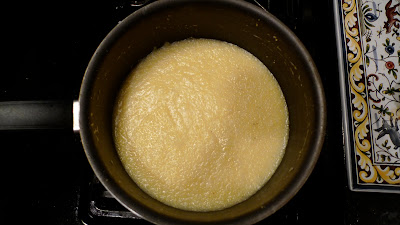
So back to breakfast and winter. When I lived in China having congee was not a bad way to go, though I much prefer the Thai khao tom soup. Both are rice porridges/soups commonly eaten in the morning but also at other times in the day or when you are ill. While I love these two options, I decided recently to cook polenta (or grits for some) for my morning meal. There is nothing quite like a slow cooked polenta (about 30 minutes if you forgo the hardcore 3 hour endeavour of perfection it can be as well) with a little butter, some grated cheese, a sprinkle of salt and pepper, and you have yourself a sweet and savory nourishing warm breakfast.


Cornmeal (aka. polenta, grits, hominy grits - there are sometimes differences between them but for these purposes they all come from corn and are then ground into varying grain sizes) is incredibly healing for the digestion, as well as helping to improve appetite (if you're suffering from a chronic illness), strengthening the heart, and promoting healthy teeth and gums. It is also an excellent way to get your corn in when it is not in season, which it clearly isn't in February. You may recall I wrote about the medicinal properties of corn silk some time ago as well, being a wonderful diuretic and anti-hypertensive medicinal food. Corn (especially the non-genetically modified kind when you can find it here in the U.S.!) is very healing overall.

All I did for this recent polenta breakfast was pour approximately the amount of water I wanted the cornmeal to transform into (about 3 cups), brought it to a boil with salt and some butter, and slowly added in the cornmeal (I would say the measurement is 1 to 6, cornmeal to water, but it depends on whether you want it soupy or thick). You can keep stirring initially but if you have good cornmeal you can also just stir occasionally and let it sit on a slow simmer. The leftover polenta can go into the fridge and be seared in the evening and topped with a lovely ragu or some other such sauce. There are much more nuanced and elegant versions of polenta or grits or whatever you want to call your cornmeal decoctions, and you can find them here if you want to go the way of the Italians, or here if you want to go the way of the Southern Americans and cook grits or hominy grits!

I'm going to admit something here, I didn't just have the lovely aforementioned warm grits/polenta alone, I ended up crisping up a slice of bacon, chopping it into bits, and throwing it in. Medicinal properties of bacon you ask? Well, if it's from a well raised pig it's really not all that bad, in moderation. Everything in moderation.

Tuesday, September 1, 2009

Garbanzo Love


Yesterday as I was perusing some Trader Joe's products I had a taste of some Indian inspired chick pea concoction (chana masala) and it tasted so wonderful I quickly read the back of the ingredients and came home to cook something that would at least allude to it's memory. I generally don't (ever) like to buy frozen pre-cooked foods, but I almost came home with that stuff. However, I'm glad I didn't because I managed to conjure up a just as tasty dish sans the added preservatives and junk they put in. I've discussed beans (black beans) previously on here. I've also wanted to delve into garbanzo beans, especially after seeing them fresh in their little green leaf jackets at the Mexican grocery store I sometimes shop at. Well, now that Chicago suddenly got chilly and I needed to warm myself up with something that wasn't too stewed or meat-laden, this dish was perfect!

As an added bonus, beans in general are excellent for regulating water, sugar, and other aspects of metabolism. Garbanzo beans (aka. chick peas), are particularly beneficial to the digestion, pancreas, and the heart and are higher in iron that most other legumes. One of the wonderful things about Chinese Medicinal nutrition is that the principles are so simple and beautiful whilst also steeped in serious study and history. The easy way to remember that a garbanzo bean is good for your heart is that it looks like a heart, thus the garbanzo love title.

I had a can of these love beans at home, preserved in water and sea kelp. I also had the required tamarind pulp which I have been itching to use but the usual dishes I make with it felt too hot for the summer so I was holding off. Everything in this recipe was medicinal and I was so excited to taste it! Garlic, onion, ginger (digestive), tamarind pulp (aids digestion, fights fevers, amongst countless other uses), tomato (tomato season is wrapping up and I had a beautiful heirloom waiting at home), salt, chiles (wonderful for moving the blood and circulation in general), cumin (warming), cilantro, and that's it! The only thing I was missing was tumeric and perhaps correander seeds, which I substitued with the sprinkled cilantro (it helped). I sauteed the garlic, ginger, onion, and chiles for a while, on a low heat until it all started to meld, then I added one scoop of tamarind pulp, a dash of sugar (to mellow out the tartness), some sea salt, then tomatoes (I let them stew down), once it started to form a gorgeous base I added in the chick peas with a dash of cumin and cooked it all for a while longer until it all came together (dropped a bunch of minced cilantro on) and DONE, it was DELICIOUS. I can not emphasize enough how much I recommend you go home and make it this now. Eat it with some fish and rice, or chicken and rice, or pork and rice (like we did), or just simply eat it alone, it's beautiful. It settles nicely in the stomach (and heart).


Tamarind pulp (from a Thai store)


I plucked my tomato from this wonderful selection at the farmers market.


Dinner.

Here's another version I found of chana masala that I liked. This dish seems to be much like many dishes, everyone has their version.