[a medicinal cooking blog: using food as medicine to treat whatever may ail you]
Showing posts with label healthy cooking recipes. Show all posts

Monday, June 8, 2009

Creating in the Kitchen


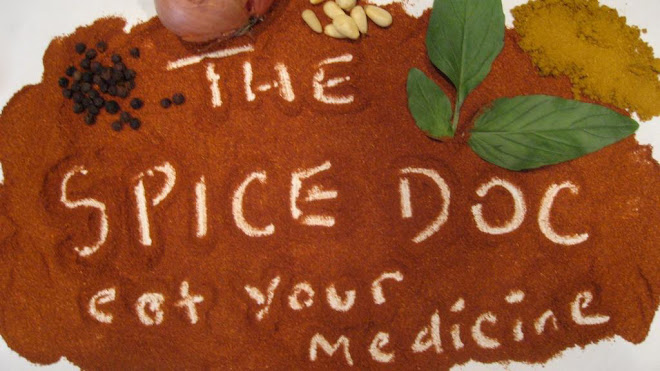
I finally decided to make my title/header a bit more fun and creative, and did it last night in the kitchen. Coming up this week : medicinal wines and oysters.

Tuesday, May 26, 2009

Crumply Celeriac


If you are still craving a starch but don't want it to be so heavy like potatoes or pasta now that it's getting warmer out, then celeriac is the answer to all your starchy but light desires. I was introduced to this by a good friend who makes hers with caramelized shallots, roasted celeriac, and roasted parsnips all pureed with some butter, milk, salt and pepper. The first time I had it I was in heaven! As it turns out I've likely had it before then but was unaware of it being celeriac since the French use it often in their cuisine as celerie remoulade (crispy, creamy, & delicious). You can use celeriac raw or cooked, much like daikon radish. It is only 5-6% starch unlike many other root vegetables which are much heartier. Celeriac is an excellent source of magnesium, potassium, vitamin C, and calcium.

Historically, celeriac was used as a medicinal root vegetable known then as selinon by the Greeks, and really grew in popularity in the Middle Ages in Europe. From a TCM perspective it is tonic in nature for your digestion and would be recommended when you have trouble eating heavy foods or are experiencing problems such as diarrhea or gas (in which case you would eat it cooked rather than raw). And, as I mentioned above, if you are just looking for a light starch then this is the answer.

Celeriac does in fact taste like celery as it's name divulges. If you are not into celery, you won't be into celeriac. It is a potato married to a celery. I chose to mash it up one night very simply and serve it with seared scallops and a light salad. Below are the steps I took to do this. I loved it, but if you want it a bit creamier, then I suggest adding roasted parsnips and cream. I kept it light.


First, slice off the outer knobby edges (you can't peel it, you will have to slice!)


Continue this until the naked white interior is exposed all around.


I chopped it up into cubes, mince some garlic and shallots.


Slowly begin to caramelize the shallots and garlic in olive oil.


Place the cubed celeriac in the pan and pan fry until it is soft and browned (add butter and olive oil when needed).


Add water and milk (depends on how creamy you want it) so they continue to cook down until they are soft enough to mash. Add salt and pepper to taste (you can taste at this point).


Mash. Done. Serve with steak or fish!

I like Jamie Oliver's take on celerie remoulade:
http://www.jamieoliver.com/recipes/soup-and-salad/ribbon-celeriac-salad

For a wonderful celeriac puree with poached scallop recipe go to:
http://splendidtable.publicradio.org/recipes/main_scallops.html

For a informative and historical overview of celeriac:
http://www.npr.org/templates/story/story.php?storyId=6551175

Thursday, May 21, 2009

What Your Grandma Knows


photo courtesy of: www.seniormag.com/.../images/chicken-soup.jpg

I have undertaken a passion project for you folks and for myself! While I've always been keenly aware of grandma's recipes or even a mom's wise food words, I have only really begun to chronicle them in the last few years. Yesterday, I sent out a mass email to all my friends and family around the world asking for them to send in their home remedies passed on from family members, I've gotten some very interesting responses so far and am going to wait for more before I post about it here. I won't be able to put them all up but I will put up a nice selection. If any of you reading this have one to share, please send it on to me via email (thespicedoc@gmail.com) or by commenting here. I will acknowledge you as the author of said recipe when I post it, unless you wish to remain anonymous. Of course, the most common folk remedy is chicken soup, which has consequently been officially 'scientifically' studied and they have found that the amino acid, carnosine, plays a role in why chicken soup is so good for you the world over! There are many variations on this as you can see below in the Wiki link on chicken soup. Stay tuned for the folk remedies posting in a few weeks!

Here is Wikipedia's breakdown on chicken soup and all the variations of it in the world:
http://en.wikipedia.org/wiki/Chicken_soup

Here is an article in the Science Daily on chicken soup:
http://www.sciencedaily.com/releases/2000/10/001018075252.htm

Tuesday, May 19, 2009

Chinese Grocery Trip


I still owe you all a post on nopales which is going to be up tonight, but in the meantime I thought I'd share the pictures from my jaunt with La Donna Tittle (from the cooking show "Cooking With Tittle") to the Chinese grocery store in North Chicago last Friday. I took her to get some of the basics and to peruse the medicinal/cooking herbs section and it was a lot of fun! While I was walking through that section myself, it hit me just how amazing Chinese cuisine and medicinal cooking is that it is still flourishing and accessible to the layman and not just a TCM practitioner. In China, 'eating your medicine', is alive and well I'm happy to report and I can only hope that it can be in many more places (North America and Europe to be more specific) at some point because in these places it seems we are more caught up in how to diet than what to eat and when. Food should be the everymans medicine!

While we ambled through the medicinal herb section and I went along explaining the different functions of what was available, I started to feel in awe of TCM once again. I guess it is much like being a tourist in your own country all over again, it opens your eyes to the possibilities in a new fresh way. So, I am happy to guide people through there anytime as I learn just as much as them! And it really made me miss living in Beijing, a lot. La Donna went home with herbs for EVERYthing! One of my favorites which I will definitely post about here is pang da hai, this is a seed the size of a walnut that you put in a cup of hot water and it expands much like a chia (spelling?) pet. You let it sit for 5 minutes then you drink it, it is for a dry raspy throat and all the Chinese opera singers use it. La Donna is an actress so this works perfectly for her. Some other herbs of note that she picked up where the Chinese red and black dates, very good for your qi (overall energy) and blood and very tasty and mildy sweet to boot. Below are some pictures of the aisles as we went through them. We even attracted a few of the local customers coming over to talk to me about the different uses and we exchanged ideas/thoughts - for me, that was the pinacle of the visit! I am a complete medicinal food nerd...


A picture of the medicinal herbs/ingredients


More medicinals


Happy La Donna


Me, incredibly happy with my favorite thing: chilis!!


The wonderful selection of different sardines, which are very good for your bone strength - next time instead of drinking milk (which is not really all that once you are an adult) eat some sardines!


Betel nut is something I grew up around in Asia, it is very good for expelling parasites and for suppressing hunger. I will post about it another time.

Saturday, May 16, 2009

Hibiscus for Hypertension


The flower Hibiscus sabdariffa, also known as flor de Jamaica in Spanish, is not only delicious but also incredibly medicinally beneficial. I drank this flower tea growing up in Thailand as my mother would brew it often when she found out you could purchase it there, having already been exposed to it in Colombia. I vaguely recall the tea as being "good for you" (how often we hear that nowadays), but the reason for it being good for me did not stick in my mind, perhaps because hyptertension, high cholesterol, and water retention are not necessarily something a 15 year old thinks about. Before it was just a delicious chilled rose-colored tea water with a hint of cranberry'esque tartness, now it has taken on new dimensions as I continue to cultivate my knowledge of food as medicine.

Thailand and China are in fact the major producers of hibiscus so it is no wonder I drank it often when I lived in Bangkok. It is thought to be that Thailand produces better quality hibiscus than China, but that Sudan has the best variety, though it's exports are small and rare because of production difficulties. Malaysia became a large producer as well in the 1990's.

The uses for hibiscus are varied as it is used through the world in Asia, Africa, North America, Europe, and South and Latin America. In the U.S. they have primarily toted it as being a drink high in vitamin C. In Thailand they recommend it for the treatment of high cholesterol and hypertension. In South America it is considered good for not only it's high vitamin C properties but also as a mild diuretic and laxative. In Sudan it is used as a cough suppressant and the heated green leaves of the flower are used for cracks and boils on the feet. There are so many uses for this beautiful flower, that I am likely missing some, but will keep this post updated if I learn of more.

While I have been referring to it as flor de Jamaica since I bought it in a Mexican market, you can also find it under the following names (I obtained this information from Wikipedia):

"The roselle is known as the rosella or rosella fruit in Australia. It is also known as meśta/meshta on the Indian subcontinent, Tengamora in Assam, Gongura in Telugu,chin baung in Myanmar, กระเจี๊ยบ'krajeab in Thailand, bissap in Senegal, Mali, Burkina Faso, Benin and Niger, the Congo and France, dah or dah bleni in other parts of Mali, wonjo in the Gambia, zobo in Nigeria (the Yorubas in Nigeria call the white variety Isapa (pronounced Ishapa)), karkade (كركديه; IPA: ['karkade]) in Egypt, Saudi Arabia, and Sudan, omutete in Namibia, sorrel in the Caribbean and in Latin America, Flor de Jamaica in Mexico, Saril in Panama, rosela in Indonesia, asam paya or asam susur in Malaysia. In Chinese it is 洛神花 (Luo Shen Hua)"


There are a few different ways to make hibiscus tea, you can boil and steep the flowers for 20 minutes or you can soak them in room temperature water for 2-4 hours (depending on how strong you want it). I chose to do the boil and steep for 20 minutes and the tea turned out delicious, I added 1 large tbspn of rock sugar to sweeten it and I served each glass with a sprig of mint leaf, delectable! Here are the pictures:


The approx. measurement is 1/2 cup flowers to 4 cups of water, but you can play it with according to taste.


Let the flowers steep for 20 minutes.


I used rock sugar which I find to be less "sugary" and more nourshingly sweet rather than sickeningly sweet.


The dried flowers expland and turn back into vibrant flowers in the water.


I put the steeped flower juice into a pitcher so I can keep it in the fridge nice and chilled and ready to drink whenever I want.


A glass of chilled flor de Jamaica juice with a sprig of mint in it.

If you were to primarily use this to treat hypertension, high cholesterol, cystitis, or water retention, you would drink it every day. Because it is a mild diuretic, there aren't the normal dangers associated with diuretics. However, I always recommend that people monitor themselves whenever using anything on a daily basis and it is good to take "medical breaks" from frequent use of any herb or medicinal food.

As a side note, while researching this flower I came across a recipe for Sorrel Punch, which is the fun and alcohol-laden Carribbean version of flor de Jamaica (they just like to have more fun in the Carribbean!). Here is a general recipe (which I have not tried yet but hopefully will attempt this summer), I got it from the blogger eCurry.com:

To make the Sorrel Punch:

Ingredients:

1. 2 cups dried sorrel flowers
2. 1/4 cup fresh gingerroot, peeled and chopped
3. 1 stick cinnamon
4. 4 whole cloves
5. 1 cup sugar
6. 6 cups water
7. 1 1/2 to 2 cups over-proof Jamaican rum (or any of your favorite dark rum)
8. Lemon, lime and orange slices, for garnish

Preparation:

In a large, heat-proof bowl, combine the sorrel, the ginger, the cinnamon stick the cloves and the sugar. Set aside.

Bring the water to a boil and pour it over the sorrel, spices and sugar. Allow the mixture to cool. Cover the bowl and let and let the punch steep for two days.

Strain the mixture through a fine cheesecloth and return the liquid to the bowl.

Stir in the rum. Cover once more and allow the mixture to stand for two more days.

Strain the punch a final time and place it in the refrigerator to chill.

Serve the Sorrel Punch over glasses full of crushed ice, with garnishes of lemon, lime and orange slices. (During the holidays, this is accompanied with a slice of Fruit Cake)


**The lovely hibiscus flower has made it into the news (8.20.2009) as the New York Times displays all the edible flowers being used in cocktails.

Tuesday, May 12, 2009

Building with Black Beans


Some of you may be happy to know that black beans are medicinal in many interesting ways. One of those ways is something I've mentioned here before and will likely keep mentioning, they are good for your blood. I feel like I may need to explain this whole "good for your blood" thing a bit more as it is becoming a common thread and it may seem a bit vague and possibly vampiric. I've mentioned it in the beef noodle soup, beet, and mochi postings. As you may recall in the beet piece I touched on how Aphrodite was the goddess of beets and that it was said that this was because beets were good for beauty, well blood is your beauty in essence. In fact, it is your essence, and just so happens to be a very important thing to nourish. This does not mean you have to be blood deficient (ie. anemic or anything along those lines) in order to take care of this blood thing. Rather, it's something that you maintain always so that you keep your bases/building blocks stable, healthy, and yes, beautiful (for men & women!) for as long as possible. In TCM blood is considered one of the essential building blocks (in fact, it is likewise in western/modern medicine as well) and it is not just the stuff that oozes out when you cut yourself, but it is the body's sustenance. Your body's daily culinary feast is blood. Therefore, I'd say you need to make that blood pretty good in order for your body to be happy. I won't get too technical beyond this (though it would be fun for me to), but if any of you want more details and more technicality, ask/comment away! Now that we're done with the good for your blood thing..

Back to black beans. They are a part of the legume family and legumes are considered drying and diuretic in general. Each bean has it's separate characteristics within this. The black bean while diuretic, is also warming and sweet in nature, builds fluids and blood in the body, and is supportive of your kidney and reproductive function. Some examples of situations to eat lots of black beans: (during times of blood loss) pre and post menstrual cycle, post-partum, post-surgical; for lower back pain (you would have to eat them for a long while, 3-4x/week minimum); anemia; and infertility. Separately, black bean juice can be used for hoarseness, hot flashes, kidney stones, and urinary difficulties. There are more situations but this is a general outline which should be a good start. You can simply eat black beans to give your blood a boost once in a while, and just because they are tasty!

Black beans are thought to be native to Mexico and appeared some 7,000 years ago. There are a million ways to prepare them and many things to likewise pair them with. I cooked a simple version of black beans last night and paired them with a slow stewed piece of osso bucco (you can pair them with chicken, steak, fish, up to you!). Here is how I did it:

1. Ingredients: 1.5 lbs of dried black beans (this will feed 10 people!), onion, garlic, powdered cumin, fresh oregano (excellent digestive and consequently much like garlic, an anti-microbial), cilantro, bay leaves, salt, pepper, chile morita (you can use serranos, jalapenos, dried chili flakes, up to you), vinegar, 1-2 tomatoes
** I was missing celery and some cured pork fat in my opinion, I strongly suggest you add them (if you do add cured pork fat or celery - you should at the beginning so they stew slowly with the beans)


2. Rinse the beans a few times and make sure there are no pebbles or straggling bits of earth. Soak the beans for a minimum of 4 hours or overnight (covered in 2 inches of water). I soaked them 4 hours and they turned out fine but overnight will likely give them that extra flavor. The idea is to rehydrate them so that they remain intact and therefore nutritious during a slow boil.


3. Since I used dried chile moritas, I had to soak them in water while the beans soak too.


3. Once the beans are done soaking you will notice that the water has turned a beautiful dark color. This is where many cooks/chefs will diverge on theory. Do you throw the water out or not? Some say yes in order to avoid the flatulence factor. The rest (and I am with those) say no, that's hogwash, and the water has harnessed a beautiful dark color and flavor for a reason. I kept the water. Here is how it looks:


4. Next, you start this bountiful bean feast boiling, put the pot on the stove with the soaked beans AND their juice (if the water line is below one inch, please add so there is at least one inch above the bean line), add all the ingredients: crushed garlic (I put in 4-5 cloves, you can add more/less to taste), 2-3 bay leaves, 1 tspn cumin, 1 chopped up onion (it cooks down so it can be a rough chop), 3-4 cilantro stalks chopped up with the root and the leaves, 1 tbspn or more of oregano leaves, salt, pepper, I added a chicken bouillon cube (if you have cured pork fat, no need to add this), 1 chopped up tomato, 3 rehydrated chilis, approx a tbspn of vinegar. Bring to a high boil for 5 mins then reduce to a simmer for at least 2 hrs (3 is a good amount however). Recipes are very hard to translate into what your water is like, your stove is like, etc, and also what your taste is, so please please just play with this, taste, check, then taste and check again! The beans should not get dry ever so add water when they start sucking it all up. You want it somewhat brothy but this is not a black bean soup, it's a black bean dish. Moist but not dry.


5. Your beans should be done in 2-3 hours, you can let them simmer for longer if you want. TASTE them and decide for yourself. Some people like them beanier (more bean roughness), some like them mushier like peas. Up to you. At this point you will want to make what is referred to as the sofrito, which consists of what you started with at the beginning. There are many variations on sofrito much like most recipes, so you can play with this as well. They even sell it in bottles in the Mexican or Latino-catered stores. If you are making it from scratch, mince up 4-5 cloves garlic, 1/2 - 1 onion, 1 tomato, cilantro, a green pepper, olive oil, salt, pepper, and blend - you can add as much as you deem necessary (to taste) to your black beans. If you have leftover sofrito you can freeze it and use another time. Here is a link to a few more recipes for this:

http://allrecipes.com/Recipe/Sofrito/Detail.aspx


6. During this whole bean thing you should have cooked what you chose to accompany the beans, I cooked rice, a slow simmered osso bucco, and I also added a garnish and sliced avocado. I like a good garnish to bring out the flavors of a dish sometimes using what was originally in the dish. A quick digression here, I am currently reading Bill Buford's book Heat and he mentions that Mario Batali calls this type of garnish a "high note", I quite like this reference as it is indeed the high note of the dish bringing out all the other notes. In Thailand they often do this, adding a bit of raw to a cooked dish whether that is vinegar or a garnish. For this dish, I prepared a garnish of cilantro, vinegar, onion (minced), and sea salt. I added a dollop of that to each plate on top of the beans, along with the rice, bit of meat, and sliced avocado. Oh and of course, I served a hot sauce on the side (Franks, which is vinegary and not so hot).


Other ideas for black bean dishes: black bean salsa in the summer, black bean hummus (I'll definitely do that one next), black bean and corn soup, and on and on. I hope you enjoy some black beans next time you're feeling the need to build yourself up a bit. I woke up feeling great today post black bean feast.

**Medicinal note: some signs and symptoms of "blood deficiency" as per TCM are brittle nails, dry skin, scanty menses (for women), brittle hair, thirst/dry mouth

ADDENDUM RECIPE:

After cooking with the black beans, a few weeks later, I decided to go for it again but this time I did it with Flor de Mayo red beans (similar medicinal value to black beans), I added two smoked pork hocks, corn, carrots (towards the end so they didn't disintegrate), celery, Thai chili's (instead of chipotle since the pork is smokey enough and I wanted more kick) and extra onion - otherwise the recipe is exactly the same as above and you should follow those steps. This I must say turned out amazingly well and I liked it even better, you have to cook the hocks in the beans for at least 3 hours so they get soft (and they impart a lovely smokey flavor), take them out and slice up and place back in the beans, served with sliced avocado and a dollop of yogurt (in lieu of sour cream).


Friday, May 8, 2009

Bloody Beets


It wasn't a nutrition class or a teacher or even a chef who truly made me lust for beets, but rather the writer Tom Robbins in his book about the quest for immortality in Jitterbug Perfume. I read this wonderful book at some point during college and while it's a great story, what I really took away from it was the image of a beet as it had come alive in all it's deep burgundy glory. Before I delve into how to love and use a beet I'll show you the opening lines to the book, because in all honesty I can only hope to say it as eloquently and sensually as Mr. Robbins:

"The beet is the most intense of vegetables. The radish, admittedly, is more feverish, but the fire of the radish is a cold, a fire of discontent not of passion. Tomatoes are lusty enough, but there runs through tomatoes an undercurrent of frivolity. Beets are deadly serious.

The beet is the melancholy vegetable, the one most willing to suffer. You can't squeeze blood out of a turnip....

The beet is the murderer returned to he scene of the crime. The beet is what happens when the cherry finishes with the carrot. The beet is the ancient ancestor of the autumn moon, bearded, burried, all but fossilized; the dark green sails of the grounded moon-boat stitched with veins of primordial plasma; the kite string that once connected the moon to the Earth now a muddy whisker drilling desperately for rubies.
"

Aphrodite, goddess of love, is also the beetroot goddess and it was this link that led many to eat beets in order to obtain beauty such as hers. There is a myth that if a man and woman eat from the same beet, they will fall in love (I can attest to it, ask my husband). As you will see the next time you buy a beet it is the same shape, size, and color as your heart and thus it is inextricably linked to it. And just one more quote here, an old Ukranian proverb states (also from Jitterbug Perfume) "A tale that begins with the beet will end with the devil". Aaaahhh....does that not make you want to play with the beet?

Beets have been used medicinally throughout the world as purifying and nourishing for the blood and heart. This goes for TCM as well, beets are recommended to women during their menstrual cycles and post-partum. Beets are also very good for moistening the intestines in cases of constipation, in particular when someone is weak or possibly anemic. In Africa, beets are used to counter cyanide poisoning. The beet is high in oxalic acid and can inhibit calcium metabolism so do not rush out and buy TONS of beets and only eat beets forever to be beautiful and have plentiful blood! Rather, eating beets a few times a week or for women, when the time calls for it eating them a bit more than that. There is a rather crude but necessary side note here, when eating beets do not panic if you see them twice. Let me get slightly more specific, they are as red going in as they are going out. I often wonder if this is what Tom Robbins meant when he said beets were "the murderer returned to the scene of the crime"...

There are many ways to cook with beets and many of you have likely had borscht, the Eastern European beetroot soup which is cooked in many different ways but always with beetroot. Now that it is spring/maybe summer (you never know in Chicago), I like to make a cold beet soup. If you're not a cold soup person then you may not love this, but if you're a fan of vichyssoise or gazpacho then this is right up your alley. I don't eat this soup in the winter except for when there is an occasional craving as it's too cold in the winter to eat cold soup, and therefore bad for the digestion.

So, without further ado, here is the recipe with pictures.

Ingredients: 3-4 large beets, shallots (or garlic), 1 container of greek or plain yogurt (greek is much nicer/creamier), chives, coarse sea salt, white pepper, white wine vinegar (or plain white vinegar), olive oil


1. Cut off the beet stems (which you can cook as well - they are high in beta-carotene)

2. Wrap the beets in tin foil individually or in one large packet if you so wish, and place in an oven at 400 degrees fahrenheit for approx. 45 mins to an hour. You will need to test by poking the beet with a knife so that it is easily pierceable.


3. Set aside and let the beets cool with the tinfoil unwrapped, like so:


4. Once the beets have cooled, cut off the rough skin (your hands and nails will likely become stained, temporarily) and chop into semi large squares.


5. Mince up shallots or garlic (it depends on how strong a kick you want) to place in a blender with your beets. I used shallots this time (approx. 4-5) but garlic is lovely as well for a stronger bite (approx. 1-2 cloves).


6. Place the beets, the shallots, a container of greek yogurt, sea salt (to taste) , white pepper (also to taste), a tbspn of white wine vinegar, drizzle olive oil, and about a cup of water. You can add salt and pepper according to your taste but I would start with a tspn of pepper and a half a tbspn of salt. Likewise with the water, I only added a cup because I like the soup thick and chunky, but you can add more if you want it more liquidy (and you will need to add more salt). This goes for the yogurt too, more creamy=more yogurt! This is how I cook, little by little, tasting along the way.


7. Liquify that puppy so it's blended well and taste IT, then add whatever you want more of as I said in #6. I like to place the soup after being blended in the fridge for an hour so it chills a bit more. Then serve with a garnish of minced chives, a sprinkle of coarse sea salt and dance with the devil!


If you want to have a heartier soup you can add cubed avocados and it gives it an extra creaminess and flavor.

Tuesday, April 21, 2009

Beef Noodle Soup - good for your blood & digestion!


I owe the inspiration to cook this at home to my friend Enisha - before this I always enjoyed eating Thai beef noodles, but I had never made them at home and I loved making a plethora of other noodles. Now beef noodle soup is at the top of my noodle dishes when having a noodle attack! Since the weather is still slightly cool and it's very important to eat warm foods when it's cold outside to protect your digestion, I am still making soups. In the middle of winter I'll tend towards a more hearty stew, but Thai beef noodles can be eaten in warm and/or cool weather because while they keep you warm they don't weigh you down.

Consequently, as I was making this soup I realized that a lot of the ingredients are very medicinal and while I have no idea if this was part of the thinking behind this soup, I was very excited to learn it! As I sit here typing the aroma of the beef neck that is stewing with all the spices and herbs is inspiring me further to share this dishes secrets!

This is by NO means the one and only way to make Thai beef noodles, and having researched it further - there are countless ways, in fact I am sure in Thailand you will find each beef noodle master to have their own little twist and secret. I know this because I have spent much time finding the "best" beef noodle soup in Bangkok, and each one has it's own nuances.

Here are the ingredients you will need:


1.Beef Neck (I love this cut but it's difficult to find - you can use many different types of beef, it depends on if you want to make the broth from scratch - IF you do, you MUST have bones on your meat. I've used short ribs and these work well but are more greasy and beef neck has a nicer shred in my opinion. If you are going to sidestep the 3-4 hours of cooking beef broth properly then you can buy some beef broth cubes or broth in a box or can and just buy a cut such as sirloin, skirt steak, etc, slice thin and add towards the end so it doesn't overcook and get chewy). **Medicinal note: cooking with the beef neck has the added bonus of getting a really rich broth from the marrow of the bone which is very good in conditions where you are weak, anemic, or post partum and post menstrual.


2. Garlic, Thai basil (it is more aromatic - but you can use sweet Italian as a substitute), fresh bean sprouts, morning glory (aka. water spinach) or pak kana (aka. Chinese broccoli), shallots, star anise, cinnamon bark, thick sweet soy sauce (you can use regular soy sauce if you don't have this), white pepper, fish sauce (aka. nam pla), lime, dried or fresh rice noodles (the thickness depends on your taste - I like sen lek which is the middle thickness (less than a fettucini and more than the thin string noodles).
**Medicinal note: star anise is good for the digestion and is a TCM herb, cinnamon bark is excellent for warming the kidneys and promoting circulation, basil is good for the digestion, white pepper can help in cases of diarrhea (considered a "cold stomach" in TCM), and garlic has endless uses (anti viral, anti bacterial, blood circulation, etc) but since it will be fried here it doesn't have as strong a benefit as if it were to be used raw (note: you need to smash the garlic and give it 15 mins. for the chemical reactions to take place to get the most medicinal benefit out of it - more on garlic later!).

Now, on to the next thing : HOW do you make these delectable noodles? Well, here are the steps and feel free to post questions if they are not clear enough.


1. Put beef neck (approximately 3-4 lbs depending on how many you will be cooking for but this will provide at least 8 hearty bowls of broth and beef with your noodles), in a big stock pot, covered in water. Add star anise (2-3 is sufficient, less if you don't like the taste of anise), 1 cinnamon bark (small size is fine), white pepper (1 tspn, you can add more to taste later), 1 tbspn of thick sweet soy sauce (if you use regular soy sauce, add 1 tbspn sugar). Bring to a rolling boil and let it simmer for a longgggg time (depending on how fresh the meat is) it should take about 2-3 hrs for the meat to begin to fall off the bone). Once it's cooked a while add some fish sauce to taste (but at least 1 tbspn if not more).

2. Meanwhile: soak the rice noodles (if they are dry) in water; slice up some shallots into thin half moons; slice up limes (NOT lemons which are yellow in color and much too sweet); wash the basil and leave on the stems; wash the bean sprouts; coarsely mince up some garlic and fry in vegetable oil so it's crispy then leave to the side in a small dish; make a small dish of prik nam pla with dried chile powder and fish sauce so you have a nice chile sauce for those that want more salt/more chile in their soup.
3. Cook the noodles for as long as the type you bought says and strain (at this point add the morning glory or chinese broccoli for the last 30 secs with your noodles), then add a small portion to each bowl, add raw bean sprouts on top, pour broth over it with pieces of shredded beef (avoid the star anise and cinnamon bark), serve to each person and have the following on the side to add as you individually please:
basil, lime, prik nam pla, crispy garlic, shallots

**Medicinal Note: Beef Noodle Soup is good for you if you are having trouble with your digestion and are experiencing excessive diarrhea or stomach cramps due to cold foods; it is also very good for those that are anemic, post partum, post menses, post surgergy where there has been blood loss.